ATL262: 2026 Black Ore AI Tax Summit
Download MP3Brian F. Tankersley, CPA.CITP, CGMA: Welcome
to the Accounting Technology
Lab, sponsored by CPA Practice
Advisor, with your hosts Randy
Johnston and Brian Tankersley.
Randy Johnston: Welcome to the
Accounting Technology Lab
podcast. This is Randy Johnston
with my co-host Brian
Tankersley, and we got to hang
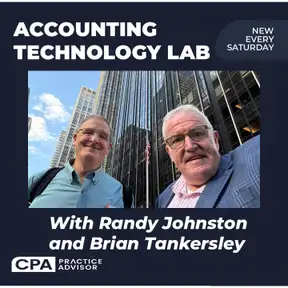
out in New York City together,
you know, you've heard the New
Brian F. Tankersley, CPA.CITP, CGMA: York
City,
Randy Johnston: yeah. Well, it's
not New Jersey, they make Pace
Baconte event, whatever. But on
May 20-first of 2020-six Black
Orr did the release event for
the tax autopilot, and Brian and
I had the privilege of attending
and presenting there, but more
important, most of the
influential people that you
would know in the profession
were also present, in addition
to a fairly significant number
of guests. Now, this was held in
the Nasdaq Tower, and again,
there were 130 to 150 of us
there, I didn't ever see or
count a final number, I just
know the room was jammed, it was
a first class event that was
run, and what Brian and I wanted
to do is give you a bit of an
update, because we believe that
this AI powered tax preparation
market, fully automated tax
prep, is coming of age, and of
course, you've got Black Ores,
Tax Autopilot, but you have the
competitors of Filed and
Magnetic and Solomon, and you
have the k1 products like
Additive and Abacus, and so
forth, and it turns out this
thing is breaking wide open, but
Black or is installed in a fair
number of my client base, so
we're quite familiar with the
platform and how it works, so
you know, as it turns out, the
event was emceed, if you will,
by Kelly Phillips Erb, better
known by some of you as Tax
Girl, who writes for Forbes. She
did a nice job of running the
event throughout the day, but
the first presentation was done
by El Shiner, which I have
worked with off and on since
inception of Black Orb. Now,
there's lots of interesting
background on Eyal, but you
know, he basically did kind of a
tone-setting opening remark,
talking about how, you know,
they'd kind of got their start
2023 at AI CPA engage, and that
they believe that the tax
profession is currently
suffering from about 25 million
hours of annual shortfall of
labor, and they had pretty good
statistics to back this up, and
they thought by 2030 there could
be as much as a 600 million hour
shortfall, and of course we have
been talking in other accounting
technology labs about the
shortage of talent in the
profession and people entering
the profession, and so forth,
but another couple of claims
that Eyol made that I thought
were pretty interesting that he
thought by the end of 2027 we
would have fully autonomous tax
prep, and by the end of 2028 we
would have fully autonomous
entity tax rent, so you know
those are all big deals, and he
also went on to state that tax
has an ontology problem, and you
know, Brian and I actually just
looked at an AI extraction tool
that did a wonderful job of
ontology, we'll talk about that
in another accounting technology
lab, but E all then said, look,
they went through two plus quiet
years working with a lot of
design partners, many of which
were my CPA firm clients, and
they wanted to produce a 100%
optimal AI with 99% accuracy, a
98% autonomy, 98% time savings,
and 80% cost savings that
allowed two times faster review,
that was what they basically
said. Now, as it turns out, they
quoted a firm in Austin, Maxwell
Lock and Ritter, that Brian and
I have both known for a long
time. They're a member of CPA
America, a fine firm in the
Austin area that had prepped tax
returns on black or in anywhere
from zero time to five minutes,
and that's a pretty big claim.
And again, we know the people
there, and I know that to be a
valid claim. So El closed up his
time talking about how you know,
if we spent less time in prep,
we could move more of our labor
into advisory, and that black
ore could allow your firm to
have better margins on tax
returns, and you would be able
to use your talent in different
ways. So now that's a bit of a
rant on the opening keynote,
Brian. So you know, you were
sitting in the room trying to
experience it, if you will, and
it was an experience, for no
doubt. What have I missed on
Els' presentation that you might
call out?
Brian F. Tankersley, CPA.CITP, CGMA: I
think you pretty much got it
all. I think it was a very
interesting presentation that
kind of just to kind of get
everything oriented here, you
know, the 600 million hour
number just absolutely blows my
mind, because if I'm doing the
math right here, that's 30,000
FTEs, and you know that's a lot,
and so when we're thinking about
these things now, I think it's
a, I think it almost shows us
that shows us the inevitability
of AI tools in this prep space,
and I think it's, you know, I
was said I was very impressed
with that. I was also very
impressed with how well Kelly
ran the event. I think she did a
very good job. She's an
outstanding writer and was also
an outstanding emcee.
Randy Johnston: Yep, super well.
Then the next one up, and I
always say your name wrong,
Teddy. I'm sorry, Teddy
Nawanchu, who's the VP of
operations, and I talked to
Teddy pretty frequently, and he
knows I have trouble with his
name. So, again, sorry, Teddy,
but Teddy actually had
experience at RAMP, and they
pulled in the Director of
applied sciences, Ryan Stevens
from RAMP, also, and today RAMP
claims to have 34% market share
of AP and expense processing.
They're growing very quickly. In
fact, there were some pretty
significant announcements the
week that Brian and I record
this, the day, well, the week
before in this window, but you
know, he basically then went on
to explain some background on
that. Now it turns out that, you
know, Teddy has a background at
Goldman Sachs and Advent
International, and Ryan talked
about the teams of AI people
that they had, and he was a data
scientist at Meta Facebook to
most of you before joining
there, and he has a PhD in
economics, and so forth. I mean,
the boy was really fun to listen
to, but basically he was trying
in the presentation to separate
Ramp the company from Ramp the
product, which has been AI since
the beginning of it, and in the
early days he pointed out that a
lot of the expense tracking
products, some of which you,
Brian, and I helped on, like
Concur, which is now owned by
SAP, was an OCR product, and
then they took maybe AI and
machine learning steps to try to
improve things over the time.
Well, what Ramp became obsessed
with was eliminating low-value
work, and they started asking
questions about the data and the
metrics and travel, and their
Ramp research agent, how they
really tried to provide context,
and Ramp became early to Gen AI,
and they acquired a company by
the name of Cohere, which had
50% of their code written by AI.
And in other accounting
technology labs, we've talked to
you about how companies like
Digits have rewritten their code
with AI, and how much code can
be done with five coding, and so
forth. You might want to check
those episodes out well, as
well, but what I think I learned
that was such a head shaker for
me from Ryan Stevens was his
statement that ROI should not
matter at first. It doesn't
matter, you should be observed,
obsessed with measuring every
project, and sorry, if you're
obsessed with managing every
project, you're going to wind up
making people scared, and you
have to give AI room to fail
again. It was one of those
things, I'm sorry, I didn't say
that as clearly, so, but you
know, the bottom line is they
went in, then to quote Andy
Grove of Intel fame, you know,
you have to let chaos reign, and
then rein in the chaos, another
catchphrase that I remembered
from the past but had forgotten,
and you have to find then the
high ROI, so if you're thinking
about AI in your firm, that's a
great thing. Let it go, keep it
chaos, but then rein in the
chaos. But you have to control
the data, that's one little
twist we'll put on that. But
find the high ROI, and you have
to seed your company with the
right people and hire the right
talent, and you can easily with
AI get two to three fold
revenue, so today Ramp, by the
way, at least Ryan's claim on
the day of launch was that Ramp
is processing 100 million in
50,000 companies, and they've
turned AI into an. Economically
transformative item, anywhere
from micro SMBs up to
enterprises, and that AI
spenders grow at six times the
revenue of high spenders. I
thought that was another
interesting stat. So, Brian, you
know, I've kind of summarized
the AI rewriting the services
economy session? What might you
observe again? You were the
cautious, careful observer, and
I was kind of the note taker.
Brian F. Tankersley, CPA.CITP, CGMA: I
think the, you know, the thing
that I would just kind of
generally say is that I think
he's spot on with respect to
those points, especially about
letting the chaos reign and then
raining the chaos, raining in
the chaos, I I was.. I will say
that I think their approach is
working quite well, simply
because I'm hearing more and
more about ramp in the
accounting profession. You know,
it's really.. it really seems to
be a product, you know, that
product, and then the automation
surrounding it seems to be
something whose time has finally
come.
Randy Johnston: Yeah, and so you
know, and Black Horror was
really trying to set this up to
be a managing partner strategic
type of event, and you can hear
with the CEO presentation for
me, all with Teddy's, you know,
VP of Operations presentation,
they're kind of setting the
framework, and fortunately,
Brian and I were able to go next
as the moderators of the next
panel on the evolution of tax
technology and how to scale at
the firm, and we were lucky to
have guests Belinda Pisana from
who's their deputy vice chair,
and Amit Ringsha from KPMG,
who's a principal in their
ignition unit, you've got Darryl
Shred, who's the head of tax at
PWC, and Lawrence Friedman,
who's the principal in tax
innovation of BDO, some
high-powered tax people, and so
Brian basically ran the panel,
you know, addressing all sorts
of different issues. Now, one
thing we're not going to do in
the rest of the podcast is
rehash every little detail of
every little session, but you
know, in each case I just want
to give the high overview, but
basically what we were doing is
talking about why AI let you
scale and what your impediments
were to being able to scale a
tax practice and where things
were headed, and so we asked
questions around that area and
listened to the responses of the
various attendees. So, Brian, is
there something that you would
recall, or say, you know, this
was really important. I know I
had some wonderful responses as
examples.
Brian F. Tankersley, CPA.CITP, CGMA: I
will say that the, you know, the
few things here. The first, and
I think the most important is
that when we're looking at, I
guess, when we're looking at all
this, I think that in general,
Belinda, and I think a lot of
other people, because I kind of
went off the script and asked
some questions about remote
work, and remote work is going
to work for some people, but
it's not going to work for
everybody, and I thought that
was a, I thought that was a very
factual thing that I think is
important that we look at, you
know, the more important thing
that I think I saw across the
entire panel was how everybody
said that getting the data
quality up was the main was the
most significant impediment to
their use of AI, because garbage
in, garbage out, and the problem
is getting the data consistent
in in depth and content, and
getting the data laid out where
it can be used to train all
these different events, and it
was really amazing to me, how
you know when you were asking
some follow-up questions toward
the end, how everybody 201
talked about this problem of
having the data consistent and
having the data in a usable
format for the, you know, for
training and for the other
purposes that you would need to
use AI.
Randy Johnston: Yeah, and that
makes to me perfect sense in
terms of just overview, Brian,
because again we're not trying
to rehash every little point
here for our listeners here
today, but let's go to the next
section, which was AI in
enterprise accounting, what's
real now, and again a panel that
Kelly was kind of the MC for,
but David for Geary, the Chief
AI Officer at Eisner Amper, Ivan
Makarov, who's a partner at
Anderson Horowitz, a 16 Z, if
you will, PE company, Jeff Wong,
a former global CIO for EY, and
I got to have lunch, actually,
or sorry, breakfast with Jeff, I
guess it was lunch, sorry, and
we chatted a little bit before
the event, Casey Johnson, who's
the executive director now at
the AI Not for Profit
Foundation, and Rob Owen, who's
the CIO at SACS, and. You know,
in this particular group they
were really talking about, you
know, how to manage these
enterprise accounting
environments, and in this
particular case, they were
talking about dealing with
agents and how to get some scale
that way, and why you wanted to
build. So, do you have any
particular key points that you
observe, Brian, in that section?
Brian F. Tankersley, CPA.CITP, CGMA: I
would just generally, you know,
I would just generally say that
I think you really need to watch
the AI Native Accounting
Foundation that Casey Johnson's
running. I think there's a.. I
think they're taking a very
leading space in this, and it's
a very exciting organization,
because I, you know, when you
look at when you look at the
impact of AI, and you look at,
you know, that data problem that
we just talked about in the
previous discussion, one of the
things that I think is so
interesting here is that I'm not
sure that I'm not sure that
we're not going to have to have
another level of revolution in
the accounting space to move to
these AI first accounting
platforms. I don't know that you
can put in, I don't know that
you can bolt on enough AI to
make them to make the legacy
products continue, you know.
Again, we'll find out whether or
not we can or not, obviously,
but I thought it was very
interesting. It was interesting
to hear the hear David and Rob
and Jeff all talk about their
experiences at Eisner Amper and
Saks and Ey in here, because I
think you know the, you know, we
have to remember here that the
sales of most of the big four
firms is almost more than this,
the revenues of every accounting
firm from five to 100 combined,
and so their dev budgets are
also a lot in here. So they're
allowed, they're keeping up with
the financial services industry,
and a lot of other places,
because they're having to audit
them, they're having to work
with the financial services
industry, which is really kind
of leading this, and so it's, it
was very interesting panel to
kind of hear what their take is,
simply because you know they
really said that we're all
tinkering with it, but the data
problem is still the data
problem, and and we're having a
hard time turning it into things
until we can get, but we're
working really hard on the data
problem, and I think we're going
to get it fixed. My take on
Randy Johnston: your point on
Casey is actually good. I have
been a guest on the AI Native
podcast, obviously. I recorded
that when I was in your office,
as it turns out. And you know,
maybe a bit of a point of
disclosure, they are going to
provide scholarships to
accounting students from the AI
Native Foundation, and they're
going to do as much as they can
to promote AI initiatives across
the accounting profession, so
you know those, the launch of
that occurs at scaling new
heights, and you know that's
kind of a big deal, so in any
case, but back to Black Orb,
then the next session up was the
AI native firm, where they were
unifying tax advisory and
assurance, and you know, here
you had Blake Oliver as the host
of the accounting podcast,
moderating this, but you had
Becky Munson, who we've talked
to in the past, who is a CPA
practice leader at Eisner
Hamper, Ryan Hitner, who's the
AI partner at Deloitte, Jim
Burke, who's a managing director
over at Witham, who's on this
panel, along with Sean McLean,
the chief digital officer of
Elevate the CPA, and our
long-term friend and cohort,
Jeannie Whitehouse, who's
president of ITA, but you know,
has come up as a CPA through
what used to be the division
company accounting software, and
many other things. So, you know,
again, we've got a long
relationship with Jeannie, but
here this idea of advisory work,
and you know, Jeannie has
probably led the profession on
advisory services with her
specialty in the wine industry,
in particular, but the
discussion here was, you know,
if we have a less mundane work,
the compliance work done for us
automatically, can we use our
talent to turn it over to
advisory, and you know, in this
particular case, the suggestion
was to pivot relatively quickly,
and that many organizations have
too many high-level C-level
people, and that the AI is
crossing all functions, and that
it's probably wise to have
managers and below help rebuild
processes, and I've been talking
about how AI is helping rebuild
processes, and if you haven't
listened to our podcast on Tax
GPT and their agents that you
know are helping with processes,
cash at least basically said,
look, I'm not sure you even need
processes anymore, because the
agents might do that for you,
and I'm still not. Mentally
processing on that one, but you
know, bottom line here is
advisory services surfacing, and
you've heard us talk about
advisory services in prior
accounting technology lab.
There's a lot of fake advisory
out there. I want you to do real
advisory, and you know these
people, as they were talking
about it, I think have a pretty
good handle on the advisory
deliverable. I believe advisory
can be delivered by all size
firms if they are client first
and proactive instead of
consultative and reactive.
Brian F. Tankersley, CPA.CITP, CGMA: Yeah,
and I think that is a, that's a
big culture change, you know. I
often talk about the role of the
traditional role of the
accountant as being the
equivalent of the person that's
sitting in the limo going to
prom facing backwards, and so
they can't see what's coming
ahead of them always, because
they are facing backwards,
they're looking at the stuff
that has already happened, and I
think it means that we're going
to have to broaden our horizon
to horizons to include things
like, like CRM, CRM data, and
data on the sales funnel, data
industry data, and we're going
to have to take on things where
there isn't a right answer, and
there's just probabilities, and
we have to adjust to those
probabilities, you know, it's a,
I think the thing that's hard
for the cultures inside
accounting firms is that in tax
and audit you always have to be
right. Okay, an advisory is
really much more in my mind,
like, like baseball, where you
know Ted Williams, when he
backed 400 you know, so he was,
he had winners two out of five
times, you know, just the other
60% of the time he was out, that
where that was a win, so I think
again it's it requires a crows
people to become more
comfortable with managing risk
and not eliminating it. So we're
going to have to again become,
you know, get a little bit
better at gambling if we're
going to really step up and be
the advisors that people need us
to be.
Randy Johnston: You know, it's
interesting, you bring up the
baseball analogy. Of course, I
know you're a big baseball fan,
but I use baseball earlier this
week, and I said, you know, when
it comes to calling shots, you
know, I'm not as good at it as I
used to be, because the things
are changing so quickly, but I'm
only batting about 400 nowadays,
which in baseball is pretty good
number, obviously, but I used to
believe I was batting closer to
800 on making the right shot
calls, and I think I was pretty
close to that number, by the
way, but I did have the
privilege also of speaking with
John Thompson, who I think is
one of the best advisory
thinkers in the world out of the
UK, two days before recording
this, you know, podcast, and you
know, he has several different
analogies, like you're talking
about what advisory really is,
and you know, so much of the
time people are doing
consulting, or they're doing CAS
financial analysis, they're not
really doing advisory, and you
know, so it's kind of a big deal
to get advisory right, but that
gets us then to the closing
session of the day. Alan Colton
did a bit of a presentation,
which was quite well done on
private equity. Of course, he's
been in the thick of that. He's
the CEO of Colton Group, but it
also brought along Brian Colton,
who's the chief development
officer there now, as well as
Steve Ronan, from who is the CSO
of Citron Cooperman, and Joseph
Dimano, who's the CEO at Saks,
and they want to just talk about
the private equity merger
acquisition and firm ownership
pieces, so P is in so many
conversations today, and Alan
was trying to lay out the
economics behind it, and why it
was good, and why you should do
that, and so forth. And there
was also conversation about why
staying independent was good,
which I thought was healthy, but
in the big picture, Brian, I
know you were kind of absorbing
that as well, so any other
observations from the PE
section?
Brian F. Tankersley, CPA.CITP, CGMA: I
thought it was interesting. I
thought it was interesting, the
different architectures and the
different kinds of
transformations that Alan talked
about, you know, including the
mothership, the roll up, wealth
management, ownership
transition, mega mergers, carve
out, public company ownership,
and non-PE ownership, you know,
it was, and then he actually had
logos in the, in his
presentation of some of those
mergers that met the
classification of that
archetype. It was also
interesting to me where he
talked about the largest private
equity roll-ups that were out
there, including Ascend, which
he said had revenues in 25 of
591 million, and the Creek
Professionals Alliance, that
ended up with 420 8 million,
Platform Accounting Group at 216
million, Soren, that used to be
Harris, at 192 million, Richie
May at 175 million, and then a
host of others. I found it, I
found it very interesting. To to
actually go through and and see
that list, because you know the
effect of PE is very real in in
this, and you know in some, in
some cases when PE is coming in
they are they are sending more
things offshore, in other cases
they're simply automating
processes and coming up with
standardized processes and
sharing staff, it, and so it's,
it was interesting to hear those
observations in his
presentation. It's also
interesting to, it was also
interesting to hear his take on
how the traditional partner
compensation model changes when
you move to this PE-backed
partner compensation model, and
it was interesting to hear, with
his, you know, with some of the
guests that he ended up bringing
in there. It was interesting to
also hear how they were seeing
this, and how people were having
things like, you know, they had
a piece of equity, but as soon
as they left, that piece of
equity was gone, and so it's a..
it was a very interesting, you
know, it was very interesting
presentation that he did, and
kind of a nice peek inside a
notoriously private and
secretive industry of private
equity.
Randy Johnston: So, thank you
for all of those things, Brian,
because there's so much going on
that, you know, it's just hard
to believe when you get the
chance to listen to so many
experts, and of course, the day
was wrapped up by Kelly and
Teddy. They had a nice reception
and dinner afterwards, but the
key for all of you, and the
reason we wanted to recount
this, it was a first-rate event
with really high-quality
presenters and thinkers present
a lot of very high profile high
power managing partners in the
room. The discussions I had were
really rewarding, and I hope
that most of the attendees were
rewarded. I think they were, as
it turns out, so yeah, I
Brian F. Tankersley, CPA.CITP, CGMA: mean,
I think it was probably the best
event that I've been to,
probably in 10 or 15 years, from
the perspective of everybody was
there. I mean, you had most of
the most of the senior editorial
staff at Accounting Today, you
had CPA practice advisor folks,
you had you had the earmark
people, you had all kinds of
folks in the room, and it seemed
like, you know, it was, it was
kind of like the, I don't know,
the accounting and tax
equivalent of the Met Gala,
where everybody that's anybody
is there.
Randy Johnston: Yeah, you're
right. If that's exactly what I
was going to say, if you were
somebody, you were there, and if
you weren't able to attend, I'm
sorry, you know, it was
absolutely worth the time, and a
lot of people had trouble
getting there, you know, flights
and so forth were delayed for
many of the attendees, so there
were a lot of what I'd call
travel horror stories, but Brian
and I unfortunately got a little
bit used to that. Well, that
said, friends, we will be
talking to you in other events
about new products that are
hitting the market and key
events where we think we can
share something we've learned
with you, and we want you with
us in every accounting
technology lab every week. If
you've got something you want to
hear about, please email us, and
we'll, if we have the ability to
cover it, Brian and I will do
our best until then. When you
listen in again, thanks for
being here today.
Brian F. Tankersley, CPA.CITP, CGMA: You,
Dave, you.
Creators and Guests